What it is
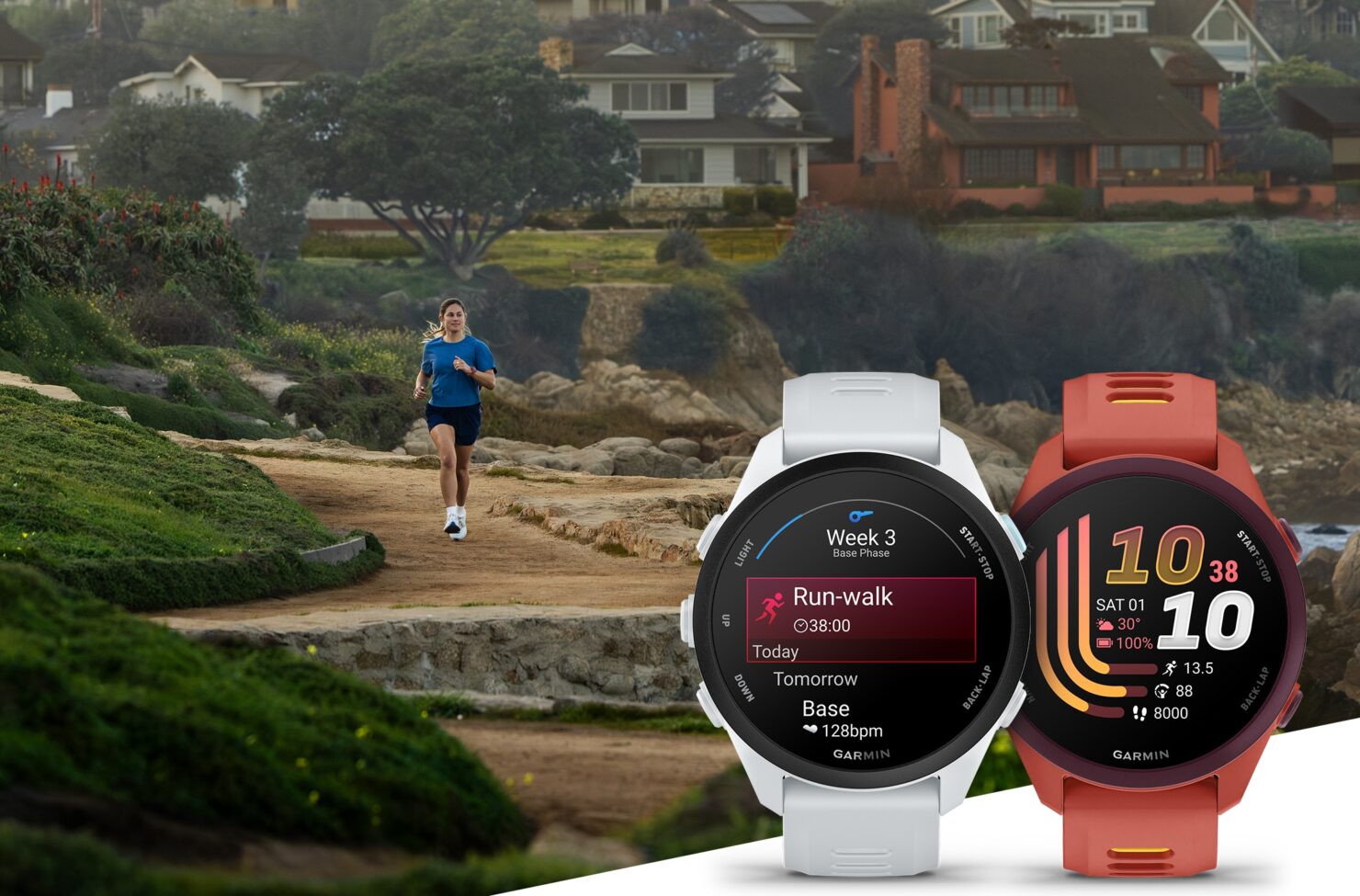
The Forerunner 170 combines a 1.2-inch AMOLED touchscreen, five-button controls, GPS running metrics, training readiness and status, Garmin Pay, a 5 ATM rating, and up to 20 hours of GPS-only battery life.
- 1.2-inch 390 x 390 AMOLED touchscreen
- Five-button control layout
- Training readiness, training status, running power, and running dynamics
- Garmin Pay with supported banks and networks
- Up to 20 hours in GPS-only mode
Where the Forerunner 170 fits
The Garmin Forerunner 170 is a purpose-built GPS running watch introduced in May 2026. It sits above the Forerunner 70 by adding Garmin Pay, floor tracking, and extra cycling metrics, while the separate 170 Music edition adds downloadable music. This research-based review uses Garmin's product, comparison, newsroom, and manual information and does not claim hands-on testing.
The model is aimed at runners who want structured training and recovery information without moving to a larger premium multisport watch. It combines a 1.2-inch AMOLED touchscreen with Garmin's traditional five-button layout, which is useful when sweat, rain, or gloves make touch input less reliable.
Size, display, and daily wear
Garmin lists a 42.6 x 42.6 x 11.9 mm case, a 41 g weight, and a wrist fit range of 126-203 mm. The 1.2-inch AMOLED panel has a 390 x 390 resolution and an optional always-on mode. Standard 20 mm quick-release bands make replacement easier than a proprietary band system.
The chemically strengthened glass and fiber-reinforced polymer case prioritize low weight over premium metal materials. That is sensible for running, but buyers expecting sapphire glass or an aluminum bezel should compare higher-tier models. The 5 ATM rating supports swimming and rain exposure under Garmin's stated guidance, but it is not a diving rating.
Running and training tools
Garmin's launch information highlights built-in GPS, pace, distance, wrist-based heart rate, daily suggested workouts, Garmin Coach plans, training readiness, training status, running power, and running dynamics. The watch also includes recovery and wellness features such as sleep tracking, HRV status, and Pulse Ox where available.
These tools can organize training, but they do not replace a coach or medical evaluation. Wrist sensor accuracy depends on fit, movement, skin, temperature, and activity. Garmin explicitly states that health features such as Pulse Ox are not medical devices and that some functions are not available in every country.
Battery expectations
The rated battery figures are up to 10 days in smartwatch mode, four days with the display always on, 19 days in battery saver mode, 20 hours in GPS-only mode, and 14 hours using all satellite systems. These are maximum figures under specified conditions rather than guarantees.
For many recreational runners, 20 hours of GPS-only use is enough for regular training and many race distances. Users planning very long events, frequent all-systems tracking, or heavy always-on display use should compare the battery profile carefully. Charging uses Garmin's proprietary plug rather than a standard USB-C connection at the watch.
Navigation, connectivity, and payments
The Forerunner 170 includes smartwatch notifications and connected safety features when paired with a compatible phone. Garmin Pay is useful only with a participating bank and payment network, so global buyers should check local support before treating it as a purchase reason.
The base Forerunner 170 does not include downloadable music; that is reserved for the 170 Music variant. Garmin's comparison data also does not list multi-band GPS for the 170. Runners in dense cities, steep terrain, or tree cover who specifically want multi-band positioning should compare compatible higher-tier models.
Activity range and recovery context
Garmin describes more than 80 built-in sport profiles across the Forerunner 70 and 170 family, supporting cross-training beyond running. The 170 also tracks floors climbed and adds cycling metrics when used with compatible accessories. Its core identity remains running first rather than expedition navigation or full triathlon hardware.
Who should consider it
The Forerunner 170 is best suited to runners who want a bright compact watch, structured training metrics, physical controls, contactless payments, and a lighter case. It is especially relevant for users who do not need on-watch music or multi-band GPS.
Who should skip it
Choose another model if downloadable music, premium case materials, mapping, multi-band GPS, or especially long GPS endurance is essential. Non-runners who mainly want notifications and basic wellness tracking may also be better served by a simpler general-purpose watch.
Bottom line
The Garmin Forerunner 170 packages a clear AMOLED display, low weight, mature running metrics, recovery context, and Garmin Pay into a focused midrange watch. Its proprietary charging, lack of downloadable music on the base model, and absence of listed multi-band GPS define the tradeoffs. For runners who value training guidance more than luxury materials or maps, the specification is well targeted.
The tradeoffs
Reasons to consider it
- Light 41 g case suits everyday running
- Touchscreen and buttons provide flexible control
- Broad training and recovery feature set
- Standard 20 mm quick-release bands
Reasons to skip it
- Base model does not store downloadable music
- Multi-band GPS is not listed
- Uses a proprietary charging connection
- Garmin Pay and some health features vary by region
Key specifications
| Case | 42.6 x 42.6 x 11.9 mm |
|---|---|
| Weight | 41 g / 1.45 oz |
| Wrist fit | 126-203 mm circumference |
| Display | 1.2 in AMOLED, 390 x 390, optional always-on |
| Water rating | 5 ATM |
| Battery | Up to 10 days smartwatch; 20 hr GPS-only; 14 hr all-systems |
| Memory | 4 GB |
| Band | 20 mm industry-standard quick release |
See Also
Official product pages, specifications, manuals, and related project resources.